MARBLE THE STONE LIBRARY
Egyptian Alabaster.
Egyptian Alabaster is a distinctive natural calcite stone celebrated for its rich honey-gold and amber tones, flowing ivory-white bands, and partially translucent appearance. Its dramatic layered patterns make it an exceptional decorative material for feature walls, illuminated stone panels, reception areas, and architectural accents
- ORIGIN
- Egypt — historically quarried from deposits in the Eastern Desert and Nile Valley region, including areas near Beni Suef, Minya, and Asyut.
- PRIMARY COLOR(S)
- Honey Gold, Amber, Caramel Brown, Cream, Ivory White, and Golden Beige.
- RECOMMENDED USAGE
- Interior Feature Walls, Backlit Decorative Panels, Wall Cladding, Reception Desks, Decorative Furniture, Bar Fronts, Lighting Features, Sculptures, and Interior Architectural Elements. Light transmission depends on the stone's thickness and individual characteristics. Heavy-traffic flooring and exterior applications require separate material suitability assessment.
- ADDITIONAL NAMES
- Egyptian Onyx, Calcite Alabaster, Alabaster Onyx, Alabastro Egiziano, Egyptian Banded Alabaster.
Surface finishes
VISUAL REFERENCES

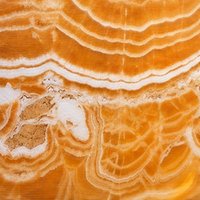

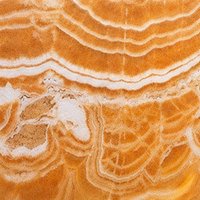
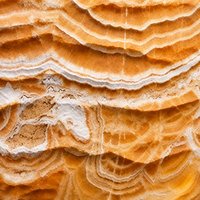
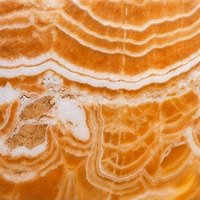
Natural detail.
Lasting impression.
Natural Layers of Light, Color & Character
Egyptian Alabaster is a remarkable natural decorative stone known for its flowing bands, rich amber coloring, and distinctive translucent characteristics.
Unlike gypsum alabaster, Egyptian Alabaster is primarily composed of calcite, a form of calcium carbonate. It is geologically associated with banded carbonate deposits and is frequently marketed in the decorative stone industry as Egyptian Onyx or Calcite Alabaster.
Its formation produces characteristic layers of honey-gold, caramel brown, cream, and ivory white. These bands create dramatic natural patterns, ranging from gently flowing lines to intricate concentric formations.
One of the material’s most distinctive features is its ability to transmit light in suitable sections. When carefully selected and illuminated from behind, translucent alabaster can create a warm decorative effect, making it particularly attractive for backlit wall panels, lighting installations, and statement architectural features.
Egyptian Alabaster has a long history in Egyptian decorative arts and architecture. Today, its natural patterns continue to make it a distinctive choice for interior decorative applications.
Because the stone is naturally variable, individual blocks and slabs may differ significantly in color distribution, translucency, banding, and internal features.
Key Material Characteristics
- Distinctive Natural Banding: Flowing layers of amber, gold, cream, and white.
- Partial Translucency: Selected sections can transmit light when appropriately cut and illuminated.
- Natural Calcite Composition: Primarily calcium-carbonate stone.
- Decorative Appearance: Rich colors and organic formations suited to statement interiors.
- Individual Patterns: Every piece has its own natural arrangement of bands and colors.
- Specialized Applications: Particularly suited to decorative panels, feature walls, and custom stone elements.
Care & Maintenance
Clean Egyptian Alabaster using a soft cloth and a pH-neutral cleaner suitable for calcite-based natural stone.
Avoid acidic cleaners, abrasive tools, and harsh chemicals that can damage or etch the stone’s surface.
Protect the material from heavy impacts and prolonged exposure to unsuitable moisture or chemical conditions.
For backlit installations, use an appropriate support structure, lighting system, and stone thickness based on the project’s requirements.
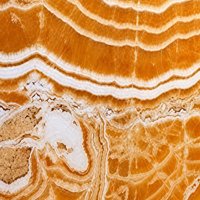
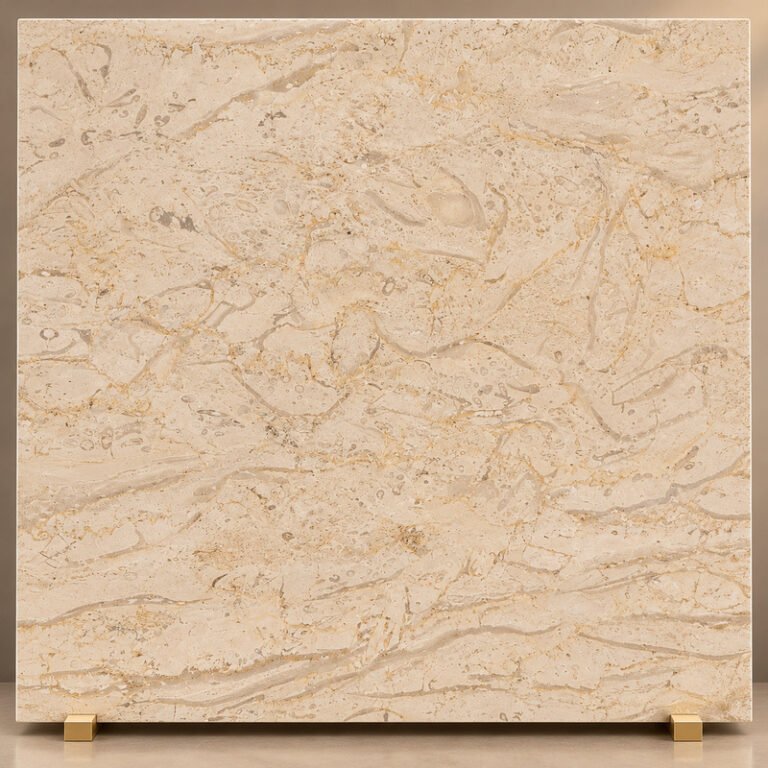
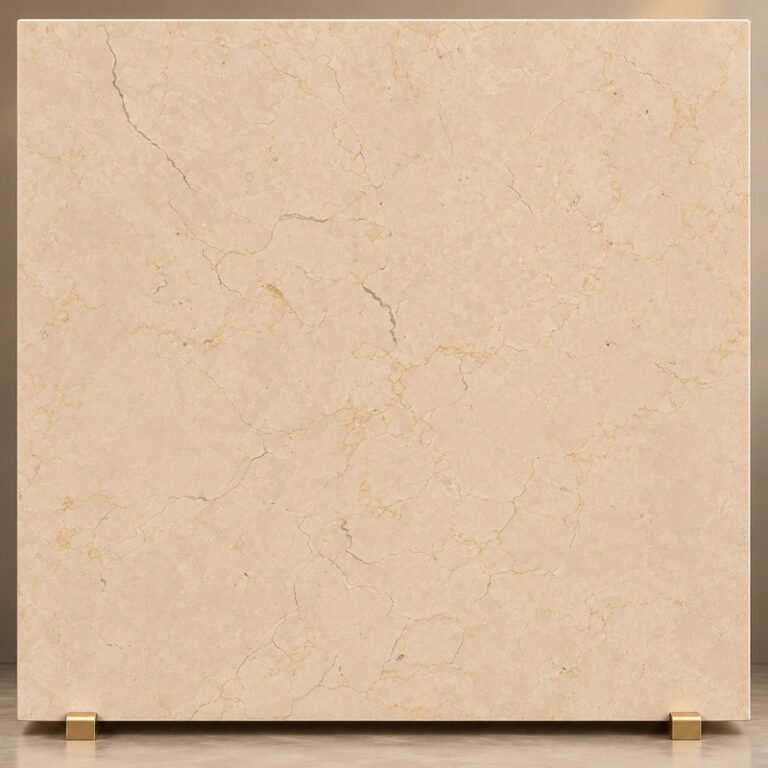
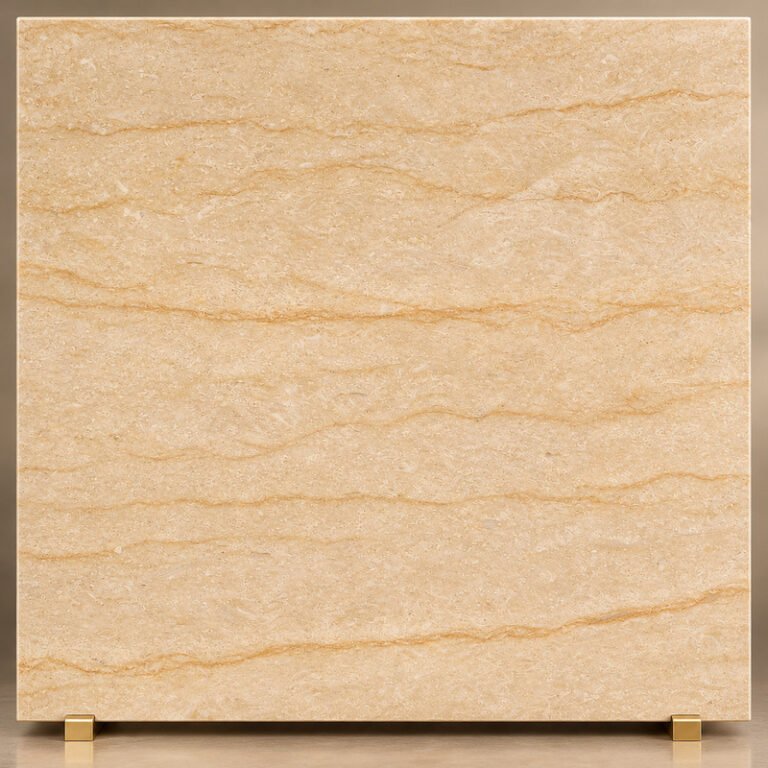
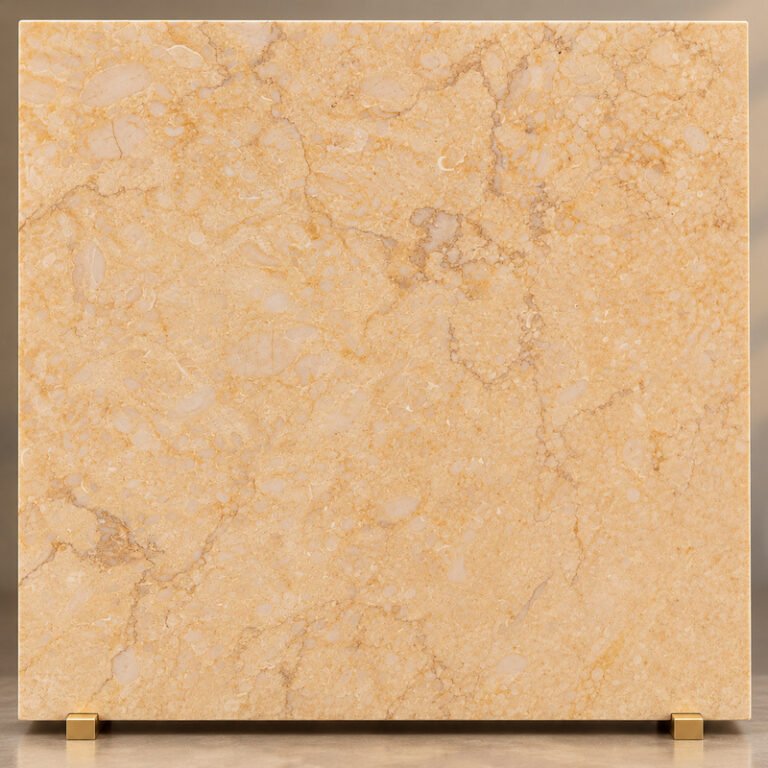
Egyptian Alabaster displays a distinctive arrangement of honey-orange, caramel-brown, and ivory-white bands that form flowing, irregular natural patterns.
The supplied stone image features broad amber layers separated by cream-colored lines, with intricate mineral formations and concentrated bands creating pronounced visual movement.
Its natural texture is enhanced by polishing, which emphasizes color depth and the contrast between individual layers. Depending on thickness and internal characteristics, some areas can also display varying degrees of translucency.
Sizes & thicknesses
| FORMAT | THICKNESS | DIMENSIONS / WIDTH |
|---|---|---|
| Slabs | 1.5–10 cm | Up to 200 × 300 cm |
| Tiles | 9 mm–10 cm | From 30 × 30 cm; up to 61 cm wide × variable lengths |
Technical specifications
- FINISHED SURFACE
- Polished, Honed, Brushed, Bush Hammered, Sandblasted, Split Face, Tumbled
- WATER ABSORPTION
- 0.25%
- DENSITY
- 2,600 kg/m³
- FLEXURAL STRENGTH
- 1,580 psi
- COMPRESSIVE STRENGTH
- 12,800 psi