
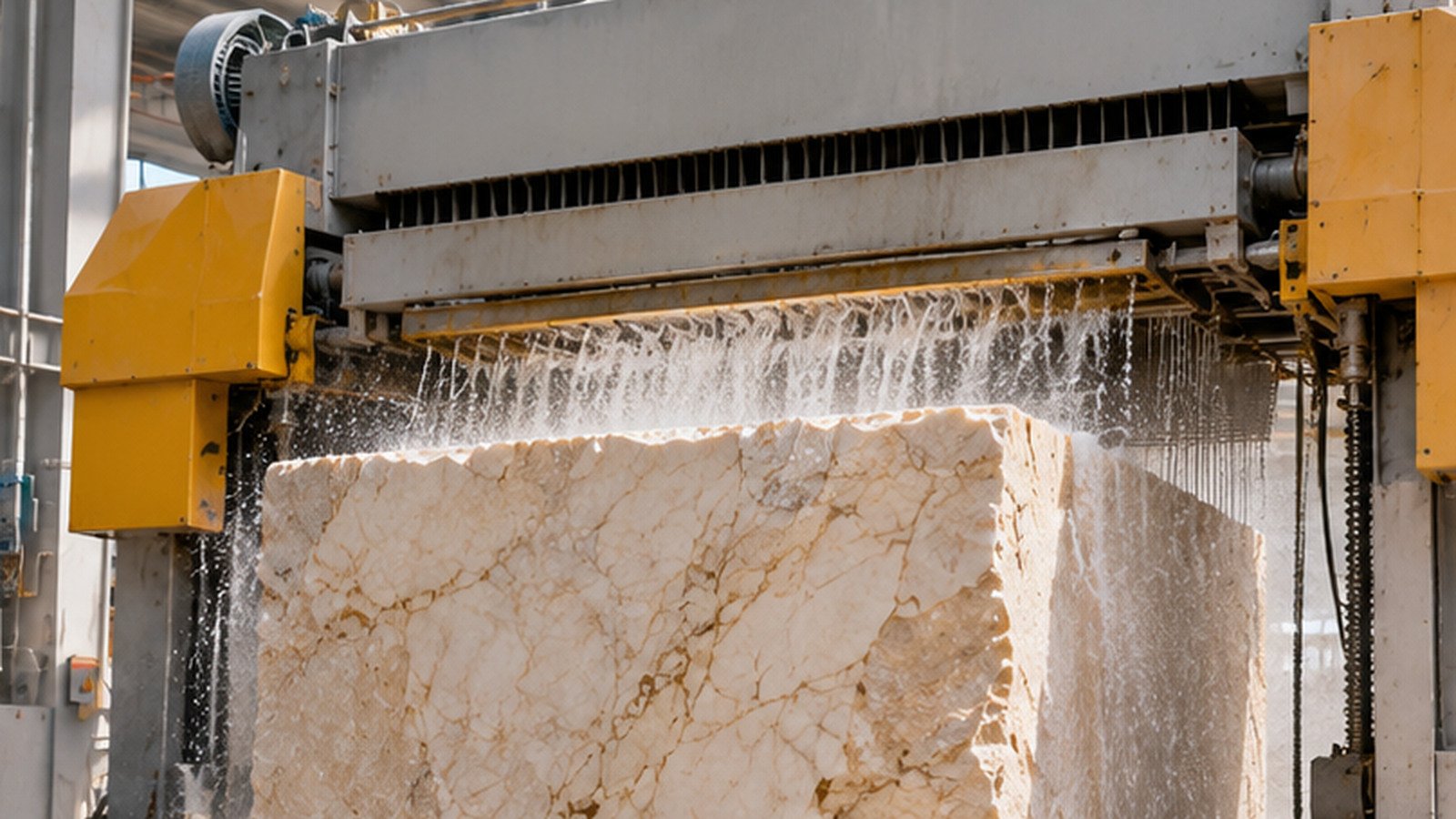
About Blocks to Slabs
Transforming raw quarry blocks into natural stone slabs is a fundamental stage of marble and granite manufacturing. Godran Stones coordinates slab-cutting requirements for Egyptian natural stone, helping international importers, distributors, and fabricators obtain suitable material for subsequent finishing and custom production.
From Quarry Blocks to Production-Ready Slabs
Converting large natural stone blocks into slabs is one of the most important stages of the manufacturing process. It establishes the slab dimensions, initial thickness, and cutting orientation required for subsequent finishing and fabrication.
Godran Stones works with Egyptian marble and granite materials to coordinate block-to-slab processing according to the selected stone and customer requirements.
Each natural stone block has its own characteristics, including mineral structure, veining, and dimensions. These factors are considered when planning the cutting process to produce slabs suitable for their intended applications.
The resulting slabs can proceed to surface finishing, tile production, architectural fabrication, or other project-specific manufacturing stages.

Slab Cutting
The block-to-slab process begins with reviewing the selected stone block and determining the appropriate cutting orientation.
Factors such as block size, natural characteristics, required slab thickness, and intended use influence the cutting plan.
Depending on the material and processing facility, industrial stone-cutting equipment may include gang saws, diamond-wire systems, and other specialized cutting machinery.
Water-cooled cutting is commonly used to manage heat, remove stone particles, and support the cutting process.
- Block Preparation: Assessing the selected block's dimensions and visible condition.
- Cutting Orientation: Considering natural veining, mineral patterns, and desired slab appearance.
- Slab Thickness: Planning the required thickness according to the project specifications.
- Industrial Sawing: Cutting large blocks into individual slabs using an appropriate method.
- Material Utilization: Considering usable dimensions and material loss during cutting.
- Production Planning: Coordinating slab requirements with subsequent manufacturing stages.
The objective is to produce suitable rough-cut slabs that can continue through the required stone-processing workflow.
Slab Inspection & Preparation
After the cutting process is completed, the individual slabs are separated and prepared for further handling.
This stage provides an opportunity to review the material’s natural appearance, including color distribution, grain structure, veining, and visible characteristics revealed by the cutting process.
Newly cut slabs typically retain a sawn surface until they undergo the required finishing treatments.
Depending on the order, the material may proceed to polishing, honing, other available finishes, or additional cutting into tiles and custom architectural elements.
- Dimension Review: Checking the produced slab dimensions.
- Thickness Review: Assessing the nominal slab thickness against the cutting requirements.
- Visual Inspection: Reviewing natural patterns and visible irregularities.
- Slab Handling: Moving and supporting slabs appropriately after cutting.
- Material Organization: Grouping slabs according to stone selection and order requirements.
- Next-Stage Preparation: Organizing material for finishing or additional fabrication.
These activities support production planning and help identify any issues requiring attention before the next stage.

Why Choose Godran Stones?
Natural Stone Production Support for International Buyers
Godran Stones focuses on connecting Egyptian natural stone materials with the manufacturing requirements of international customers.
Project-Based Slab Requirements
Discuss the required stone type, slab format, and thickness before production arrangements are confirmed.
Egyptian Marble & Granite Selection
Explore different Egyptian natural stone varieties for architectural and fabrication applications.
Natural Material Considerations
Block characteristics, color variation, veining, and available dimensions are considered during production planning.
Manufacturing Flexibility
Rough-cut slabs can proceed to different finishing and fabrication stages according to the confirmed project requirements.
International B2B Communication
Coordinate material specifications and order inquiries for importers, distributors, manufacturers, and construction companies.
Further Processing Options
Slab production can form part of a wider manufacturing workflow involving surface finishing, cut-to-size products, and export preparation.
Suitable Applications
From Raw Slabs to Finished Architectural Stone
Slabs produced from Egyptian marble and granite blocks provide raw material for a wide range of finished stone products.
With appropriate finishing and fabrication, these materials can be used for:
Interior and Exterior Flooring
Wall Cladding and Building Facades
Kitchen Countertops
Bathroom Vanity Tops
Staircases and Landings
Architectural Wall Panels
Tiles and Custom-Cut Stone
Commercial and Residential Projects
The suitability of each stone for a particular application depends on its technical properties, finishing requirements, and installation specifications.
Our Blocks-to-Slabs Workflow
Five Steps from Requirement to Production
01 — Material Requirements
The customer provides the required stone variety, preferred slab thickness, estimated quantity, and relevant project details.
02 — Block Selection
Suitable material is reviewed according to available block dimensions, natural characteristics, and the proposed slab requirements.
03 — Cutting Preparation
The block orientation, intended thickness, and cutting arrangements are assessed before production.
04 — Block Cutting
The natural stone block is processed into slabs using the appropriate stone-cutting method.
05 — Slab Review & Next Stage
The resulting slabs are reviewed and prepared for the agreed finishing, fabrication, or supply requirements.
Frequently asked questions
What is the Blocks to Slabs process?
Blocks to Slabs is the manufacturing process of cutting large quarry blocks into thinner natural stone slabs. These slabs are used for subsequent surface finishing and architectural fabrication.
Can both marble and granite be processed into slabs?
Yes. Marble and granite can both be cut into slabs. However, the cutting methods and processing parameters may differ depending on the characteristics of the material.
Can I request a specific slab thickness?
Yes. Customers can submit their preferred thickness for review.
Common industry examples include 20 mm and 30 mm slabs. Actual availability and achievable specifications depend on the selected stone, block dimensions, cutting equipment, and order requirements.
Are the slabs polished after cutting?
Not automatically. The block-cutting stage normally produces rough-sawn slabs.
Polished, honed, and other surface finishes are additional processing treatments that can be discussed separately.
Can I request slabs from the same stone block?
You can request material from the same block or production lot where available.
Natural pattern matching, slab sequence, and quantity requirements should be discussed before confirmation.
Can the slabs be cut into custom sizes?
Yes. Slabs can undergo further cutting to produce tiles, countertops, staircase components, and other architectural elements.
The required dimensions and fabrication specifications should be provided for review.
Do all slabs have the same natural pattern?
No. Marble and granite are natural materials, so color distribution, veining, and mineral formations can vary between individual slabs and production batches.
What information is required for an international order?
To discuss your slab requirements, provide the stone name, requested thickness, preferred surface finish, estimated quantity, target slab dimensions, destination country, and any relevant technical specifications.